Tony's Review of Deaf, Dumb, and Blind.

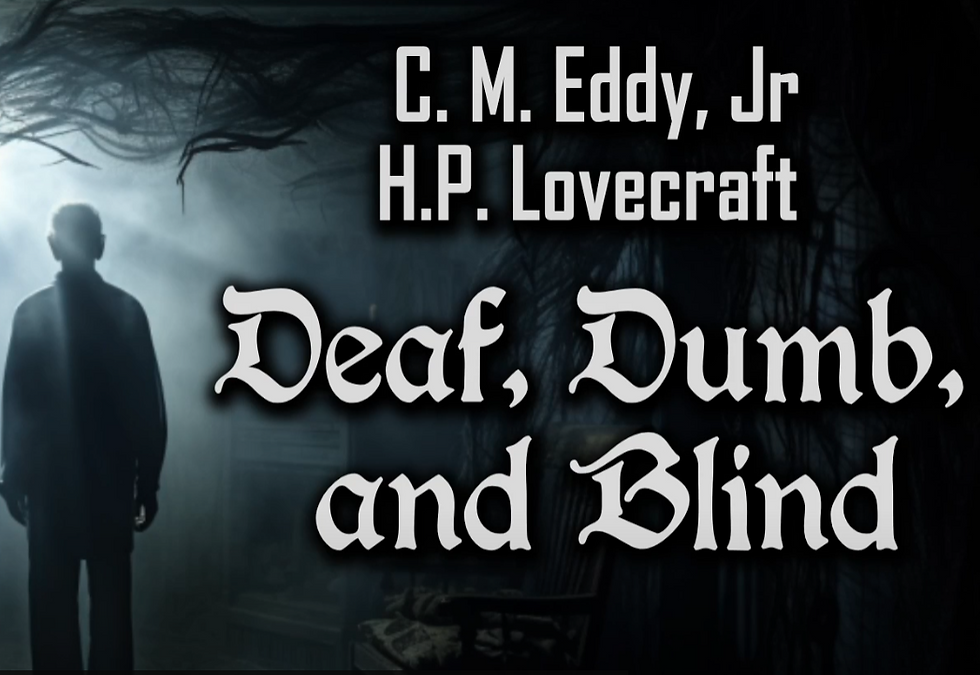

Deaf, Dumb, and Blind is a strange piece, less cosmic horror, more psychological unease penned by C. M. Eddy, Jr., with clear input from H. P. Lovecraft. It lacks the mythic grandeur of Lovecraft’s more famous work, but there’s a darkness here that still speaks to the uncanny.
The story follows a man who, due to an accident, loses his senses of sight, hearing, and speech. The medical attempt to restore them becomes the real focus. What starts as a medical curiosity quickly turns into a meditation on perception, identity, and what it means to exist when cut off from reality. In true Lovecraftian fashion, the horror isn’t in monsters but in the mind’s fragility when the doors of perception are slammed shut.
The tone is clinical, even cold at times, but that suits the subject. The protagonist's isolation is absolute, and the authors lean into that with language that is precise and detached. It’s not a thrilling story, but it is a disturbing one in a quiet, persistent way. It asks a subtle but haunting question: if we are cut off from the world entirely, do we remain human or do we become something else?
There are traces of Lovecraft’s influence throughout his obsession with sensory experience, madness, and the fragile boundary between science and the unnatural. But this is also very much Eddy’s story, more grounded and less stylized than Lovecraft’s solo work.
It’s not a tale I would call essential, but it lingers. For those interested in Lovecraft’s collaborations or in horror rooted in sensory deprivation and psychological breakdown, Deaf, Dumb, and Blind offers something unsettling and a little different. It’s a reminder that horror doesn’t need monsters it just needs a crack in the mind.


Comments