Tony's Review of "Fahrenheit 451"
- Tony Travis

- Dec 21, 2024
- 2 min read
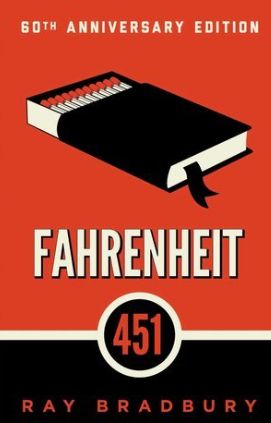
Fahrenheit 451 is a stark warning about the fragility of knowledge in a world too eager to surrender its freedoms. Originally published in 1953, this dystopian classic transports readers into a near-future society where books are outlawed and “firemen” burn them without question. Bradbury’s vision remains hauntingly relevant, challenging us to consider how easily the written word—and the critical thinking it inspires—can be lost in the quest for comfort and convenience. Reading it one must think of book burning by the Third Riech. All the way to the book banning of today. It is always about the control of information and shows a sad slide in societies.
At the heart of the story is Guy Montag, a fireman tasked with destroying books rather than saving lives. He is a dutiful servant of the state until a series of encounters—most notably with his free-spirited neighbor, Clarisse—sparks his curiosity. Bradbury deftly illustrates Montag’s growing unease as he questions why society fears the very objects he is assigned to burn. This internal conflict forms the emotional core of the novel, illuminating how a single voice of doubt can disrupt the rigid uniformity of a totalitarian culture.
Yet, Bradbury doesn’t lay the blame solely on technology or government. Instead, he highlights humanity’s willingness to relinquish the hard work of thinking for itself. This is perhaps the most unsettling aspect of Fahrenheit 451: the quiet collaboration of ordinary people in their own intellectual demise. Why wrestle with uncomfortable truths when sound bites and mindless entertainment are so much easier to digest? Bradbury’s answer is both deeply unsettling and heartbreakingly real.
At the same time, the novel offers hope through its band of outcasts who refuse to abandon literature and memory. These wanderers, each carrying a piece of the world’s lost knowledge, represent resilience in the face of widespread apathy. Their commitment to preserving books—if only in their minds—serves as a beacon, suggesting that culture and learning can survive, even if reduced to embers. Montag’s journey among them reinforces the idea that knowledge, once ignited, can never be completely snuffed out.
Bradbury’s prose is as lyrical as it is urgent. He conjures vivid images of fire consuming rows of books, a symbolic act that feels almost sacrilegious. His language mirrors Montag’s transformation—from obedient burner of words to fierce protector of them. While some of the novel’s futuristic elements may feel dated to contemporary readers, its moral and philosophical questions remain deeply resonant.
Fahrenheit 451 leaves us with pressing questions: What parts of ourselves do we lose when we stop engaging with challenging ideas? Can a society live without books and still call itself free? And how easily can our screens distract us from the world we inhabit—and the people we love?


Comments